Tuesday, 17 August 2021

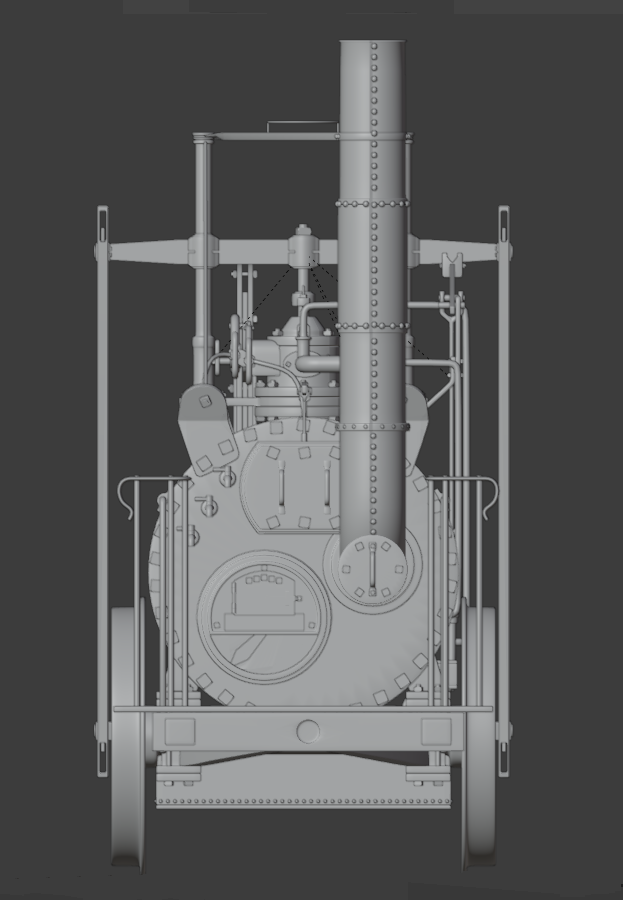
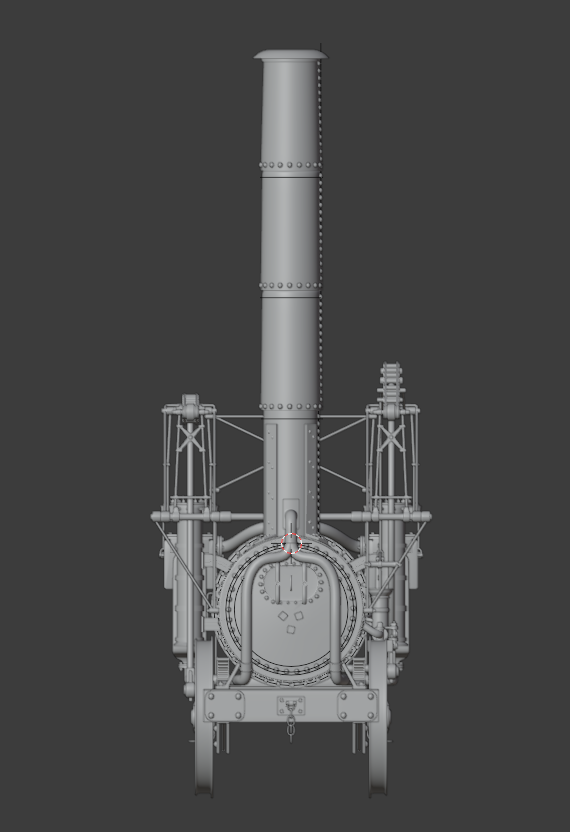
Novelty Steam Engine

 The great lightness of this engine, (it is about one half lighter than Mr. Stephenson’s) its compactness, and its beautiful workmanship, excited universal admiration; a sentiment speedily changed into perfect wonder, by its truly marvellous performances.  It was resolved to try first its speed merely; that is at what rate it would go, carrying only its compliment of cote and water, with Messrs Braithwaite and Erickson to manage it.  Almost at once, it darted off at the amazing velocity of twenty-eight miles an hour...

Mechanics Magazine, Vol. 12 (1830).


The Novelty locomotive was built by John Braithwaite and John Erickson at Braithwaite’s workshop in London specifically to be entered in the Rainhill Trials for the new Liverpool and Manchester Railway in 1829. Unfortunately, they only had seven weeks notice of the trails in which to built their engine. While the Novelty was admired for its speed, engineering and workmanship, it suffered several breakdowns during the trials and never completed the competition.

#Novelty #steam #engine #Liverpool_and_Manchester_Railway #Blender #Cycles33


Monday, 2 August 2021

Catch Me Who Can

Seven years ago Susan and I visited the Welsh National Museum in Swansea to see the full-sized, operating replica of Richard Trevithick’s 1804 steam locomotive, the first steam engine to run on rails. I took a lot of photos of the engine and built a model in Blender. This summer I discovered that Trevithick had designed another locomotive in 1808 named Catch Me Who Can. This engine pulled a couple of carriages for passengers who paid one shilling to ride the train on a circular track in London. It was a popular attraction until there were two derailments due track failure. The collapse of the project contributed to Trevithick’s eventual bankruptcy.

 The locomotive was built at the Rastrick and Hazledine foundry in Bridgnorth, England. Today a restoration of the original loco can be seen at the Bridgnorth station of the Sever Valley Railway.

#Catch_Me-Who_Can #steam #locomotive #Trevithick #Severn_Valley_Railway #Blender #Cycles


Wednesday, 21 July 2021

The Agenoria Locomotive

 This strange looking contraption, named after the Roman goddess of activity and industry, was built in 1829 by the Foster, Rastrick & Co. in Stourbridge, England. It was purchased by a mining partnership near Kingswindsford, England to haul minerals three miles to the Staffordshire and Worcestershire Canal. The locomotive served on this line until it was retired in about 1864. The original locomotive has been restored and is on display at the National Railway Museum, York. This Blender model is based on photos of the locomotive in the N.R.M.

In an interesting footnote this story: Three engines, nearly identical to the Agenoria, named Stourbridge Lion were purchased by an American engineer representing the Delaware and Hudson Canal Co. These were delivered in New York in 1829 and tested on specially prepared rails in Pennsylvania. This was the first use of steam locomotives on rails in the United States. The trials were a success for the locomotive. However, due to an error in the specifications (the locomotives were twice as heavy as expected) and the trial runs destroyed the tracks. The engines were never actually used.


Sunday, 27 June 2021

Planet Carriage

At the Manchester Museum of Science and Industry, the replica of Stephenson's Planet locomotive takes tourists for a ride in carriages like this one.


Monday, 21 June 2021

Stephenson's Planet


In November 1830 the Planet locomotive set a speed record travelling 30 miles (50 Km) in one hour. It was the ninth engine sold to the Liverpool & Manchester Railway by Stephenson’s company just one year after his Rocket engine won the completion to supply the L&MR. The Planet incorporated several advances in design and engineering. It was the first to use horizontal cylinders mounted internally. In total Stephenson built six Planets for the railway and a further three were made by another company using Stephenson supplied drawings.

My model is based mainly on the replica made in 1992 by the Friends of Museum of Science and Industry in Manchester, but without some of the modern instruments and devices used on the replica.


Monday, 24 May 2021

Stephenson's Rocket


In 1829, Robert Stephenson’s Rocket locomotive won a competition to power the Liverpool & Manchester Railway. It was engineered and built at Stephenson’s iron works in Newcastle upon Tyne with advice from Robert’s father George. The engine had a maximum speed of 45 kph (28 mph.) The opening ceremony for the L&MR was held at Liverpool on 15 September 1830. Unfortunately, the Liverpool Member of Parliament, William Huskisson, while trying to lobby the Prime Minister, the Duke of Wellington, fell out of one of the carriages and was run over by the train and killed. This Blender model is based primarily on the version of the engine in the National Railway Museum, York.

#Rocket #Stephenson #locomotive #engine #train #steam #Blender #Cycles


Sunday, 2 May 2021

The Turtle Submarine


 In 1775, American engineer and inventor David Bushnell of Connecticut built the first submarine specially designed for naval combat. The project was championed by the Connecticut governor who persuaded George Washington to provide funding for the construction. Bushnell’s idea was to approach enemy ships from below, drill into the hull with an auger and release an attached barrel filled with black powder. The barrel contained mechanically timed fuse, probably using a flintlock for ignition of the explosive. The Turtle’s hull was heavy oak staves covered in tar to make it water tight. Several attempts were made sink ships in the British blockade of New York harbor: all of them failed.

 On the night of 6 September 1776, Sgt. Ezra Lee set out with 20 minutes of air in the Turtle to sink the British flag-ship, HMS Eagle, in the harbor. After about two hours, Lee was unable to drill into the British ship’s hull. He was probably exhausted and, breathing carbon dioxide somewhat confused, at this point. He released the bomb anyway, which drifted into the East River where it made a tremendous explosion.

 Note on modelling the turtle: There are detailed written descriptions of the Turtle by Bushnell, but no drawings have survived. Based on the descriptions, several reproductions have been made and are on display in various museums. Clearly the builders of these subs had to employ some guesswork regarding the details. My model is an amalgam of some of these reproductions with some of my own guesswork.

 #Turtle #submarine #American_Revolution #Bushnell #Blender #Cycles